Published 2 July 2026
Every winter, South African farmers face the same challenge: making the most of maize residue while ensuring livestock remain healthy and productive. Frost is often viewed as just another part of winter, but its impact on maize stover and grazing quality is worth understanding.
Knowing how frost changes maize residue can help farmers manage grazing more effectively, protect soil health, and prepare fields for the next planting season.
What Is Maize Residue?
After harvesting maize, the remaining stalks, leaves, cobs and husks are collectively known as maize residue or maize stover.
Rather than removing or burning this valuable material, many farmers use it for winter grazing. Cattle benefit from the remaining plant material, while the residue also protects the soil against erosion, conserves moisture and contributes organic matter as it decomposes.
Finding the right balance between grazing and maintaining soil cover is key.
How Frost Changes Maize Residue
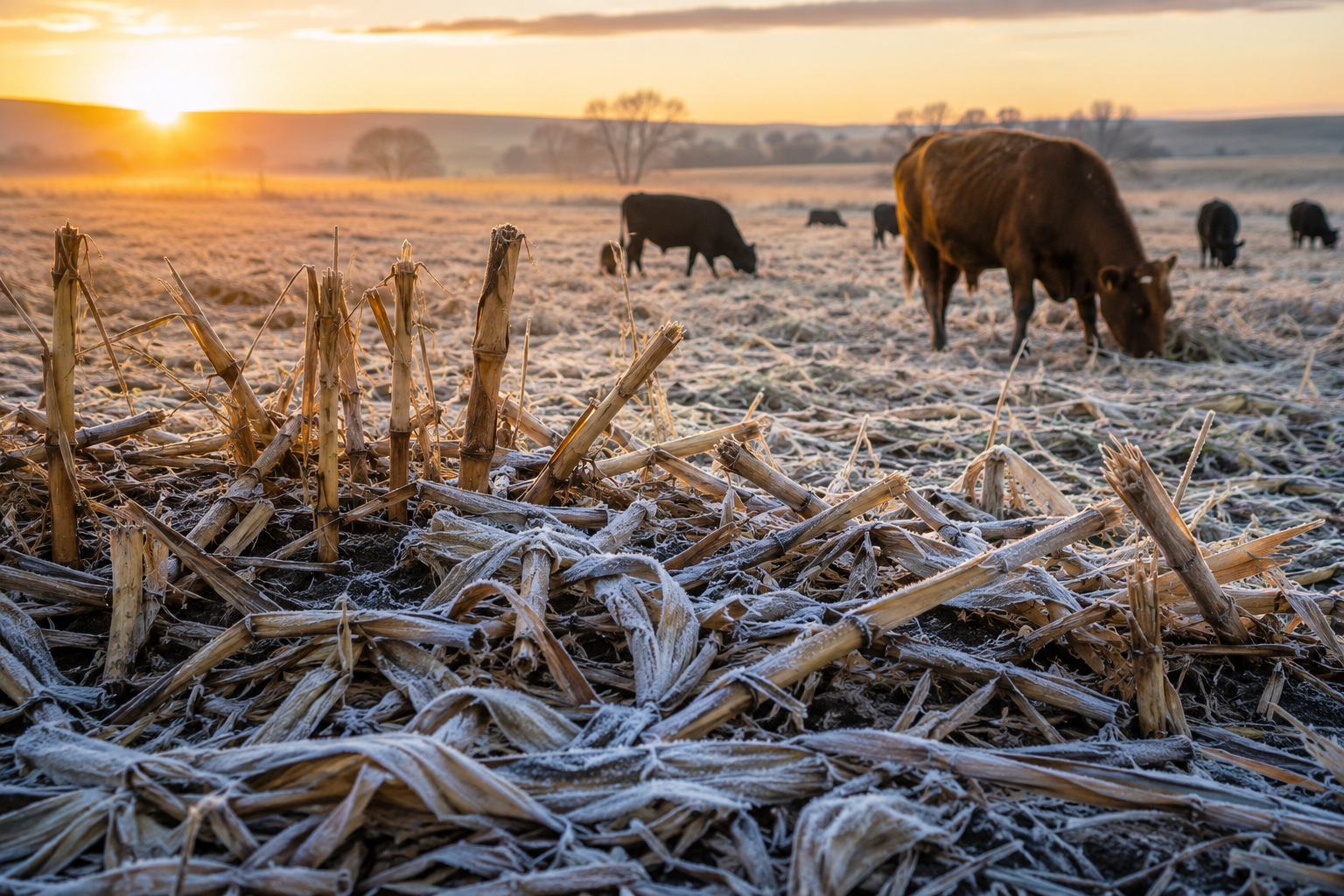
Frost causes plant cells to rupture as temperatures fall below freezing. Although maize has already matured by harvest time, repeated frost events continue to dry out the remaining leaves and stalks.
Over time, this leads to:
- Drier, more brittle leaves.
- Faster leaf drop onto the soil surface.
- Reduced nutritional value of the remaining green material.
- Increased weathering of exposed stalks.
The residue itself doesn’t disappear overnight, but it gradually becomes less digestible and less appealing to livestock as winter progresses.
What This Means for Winter Grazing
Immediately after harvest, maize residue still offers cattle a mixture of leaves, husks, spilled grain and softer plant material.
As frost continues throughout winter, the available nutrition steadily declines.
This means cattle often begin selecting only the highest-quality material first. Once these preferred components are consumed, the remaining stalks provide significantly less nutritional value.
For this reason, maize residue should generally be viewed as a maintenance feed rather than a complete winter ration.
Depending on stocking rates and pasture conditions, additional protein and mineral supplementation may still be necessary.
Managing Grazing to Protect Your Soil
While maize residue provides valuable feed, overgrazing can create problems that last well beyond winter.
Maintaining adequate ground cover helps:
- Reduce wind erosion.
- Minimise water runoff.
- Improve moisture retention.
- Support soil biology.
- Protect against soil temperature extremes.
Removing too much residue leaves soil exposed just months before spring planting.
Rotational grazing can help ensure livestock utilise residue efficiently without completely stripping fields bare.
Timing Matters
The earlier cattle enter harvested fields, the greater the nutritional value they’ll receive.
As winter progresses and repeated frost events occur, residue quality naturally declines.
Planning grazing rotations soon after harvest often allows farmers to capture more feed value while avoiding excessive trampling later in the season.
Preparing for Spring
Winter grazing should also fit into the bigger picture of next season’s crop.
Before planting begins, evaluate:
- How much residue remains.
- Whether soil cover is still adequate.
- Areas affected by compaction around feeding points.
- Whether nutrient removal from grazing should be considered in fertiliser planning.
Good residue management doesn’t end when the cattle leave the field—it influences soil performance well into the next growing season.
Finding the Right Balance
Maize residue is a valuable resource that serves more than one purpose. It provides winter grazing, protects soil, supports moisture conservation and contributes to long-term soil health.
Frost is a natural part of the process, gradually reducing feed quality as winter progresses. By understanding these changes and managing grazing carefully, farmers can maximise the value of maize residue while setting their fields up for a productive planting season.
Careful planning today helps ensure healthier livestock, healthier soils and stronger crops tomorrow.