Published 7 May 2026
Winter is one of the most underestimated profit killers in a farming operation.
By the time the first real cold fronts arrive, most decisions that determine your winter profitability have already been made—often without a clear plan. Feed gets bought reactively, livestock are kept longer than they should be, and costs quietly stack up.
The problem isn’t winter.
The problem is going into winter without a feed budget.
This guide breaks down a practical, no-nonsense framework to help you make better decisions before costs get out of control.
Why Winter Quietly Destroys Margins
Unlike planting season, where costs are visible and planned, winter feeding tends to drift.
Common issues:
- Feeding without a defined daily cost per animal
- Overestimating available grazing or crop residue
- Holding livestock too long “hoping for better prices”
- Buying feed in small, expensive batches
The result is simple:
your cost per kilogram of weight gain exceeds the market value of that gain.
That’s where profit disappears.
Step 1: Know Exactly What You Have
Before buying anything, you need a clear picture of your current feed position.
Break it down into:
- Available grazing (veld condition, not just hectares)
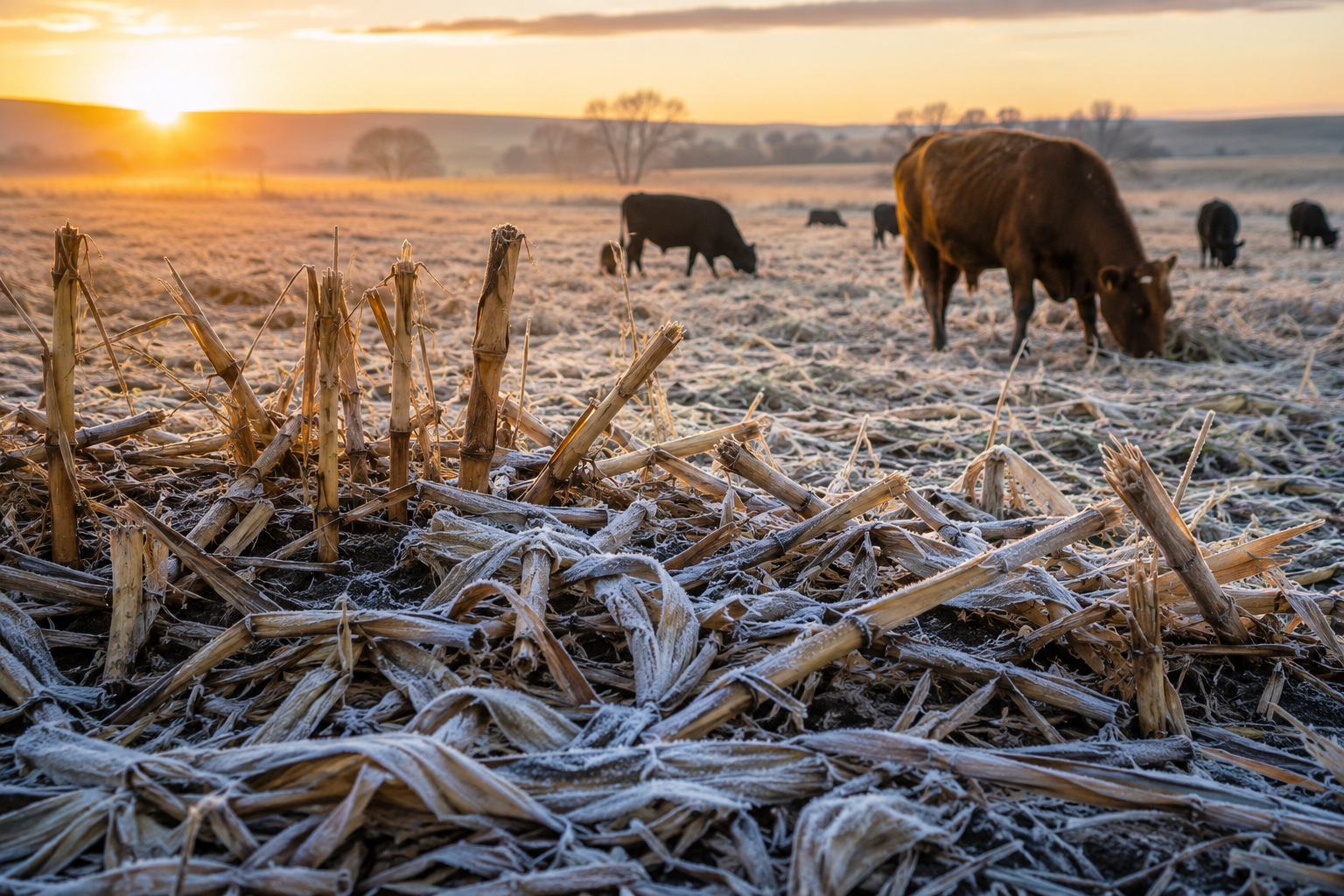
- Crop residue (maize stover, soybean residue)
- Stored feed (bales, silage, licks)
Be conservative. Winter always lasts longer than expected.
A good rule:
If your estimate feels safe, reduce it by 10–20%.
Step 2: Calculate Your Daily Feed Requirement
This is where most farmers guess—and where mistakes start.
A simple baseline:
- A cow eats roughly 2–2.5% of body weight per day (dry matter)
- A 500 kg cow = ±10–12.5 kg feed/day
Now multiply:
- Number of animals
- Days in feeding period (realistically 90–120 days)
Example:
50 cows × 11 kg × 100 days = 55,000 kg feed required
This number changes everything. It turns winter from a vague concern into a measurable cost.
Step 3: Convert Feed Into Cost Per Animal Per Day
Now attach real numbers.
Take your feed options:
- Hay
- Silage
- Concentrates
- Licks
Convert each into:
Cost per kg → Cost per animal per day
Example:
- Hay = R3.50/kg
- Cow eats 10 kg/day
→ R35 per cow per day
Now compare:
- 50 cows × R35 = R1,750/day
- Over 100 days = R175,000
That’s your winter bill—before surprises.
Step 4: Decide Early — Feed or Sell
This is the most important decision point, and most farmers delay it.
Ask one question:
Will feeding this animal generate a return greater than its feed cost?
If not, selling earlier is often the more profitable move.
Consider:
- Current market price vs expected price
- Cost of maintaining weight (not just gaining)
- Risk (drought extension, feed price increases)
Holding animals without running the numbers is one of the fastest ways to erode profit.
Step 5: Lock in Feed Strategy (Don’t Drip-Buy)
Buying feed reactively in winter is expensive.
Instead:
- Secure bulk feed early (before peak demand)
- Lock in pricing where possible
- Plan logistics (transport, storage, spoilage)
Even a small price difference per kg becomes significant at scale.
Step 6: Monitor Weekly, Not Monthly
Conditions change quickly in winter:
- Grazing declines faster than expected
- Animals lose condition
- Feed quality varies
Track weekly:
- Body condition scores
- Feed usage vs plan
- Remaining feed stock
Small adjustments early prevent large losses later.
Step 7: Build a Buffer (Because Winter Always Surprises You)
Every season has unexpected pressure:
- Late cold fronts
- Delayed rains
- Lower grazing recovery
A practical approach:
- Budget an extra 10–15% feed buffer
- Or keep flexibility to reduce herd size quickly
This buffer is not wasted money—it’s insurance against forced decisions later.
The Real Shift: From Feeding Animals to Managing Margins
The most successful farming operations don’t just “get through winter.”
They treat winter as a controlled financial period.
That means:
- Every animal has a cost
- Every feeding decision has a return expectation
- Every delay has a measurable impact
When you approach winter like this, decisions become clearer—and profit becomes more predictable.
Final Thought
Winter doesn’t have to be a loss-making season.
But it will be—if you:
- Don’t quantify feed needs
- Don’t calculate cost per animal
- Don’t make early decisions
A simple feed budget turns winter from a risk into a managed system.
And in dryland farming, that level of control is often the difference between surviving a season and building a sustainable operation.