Published 21 October 2025
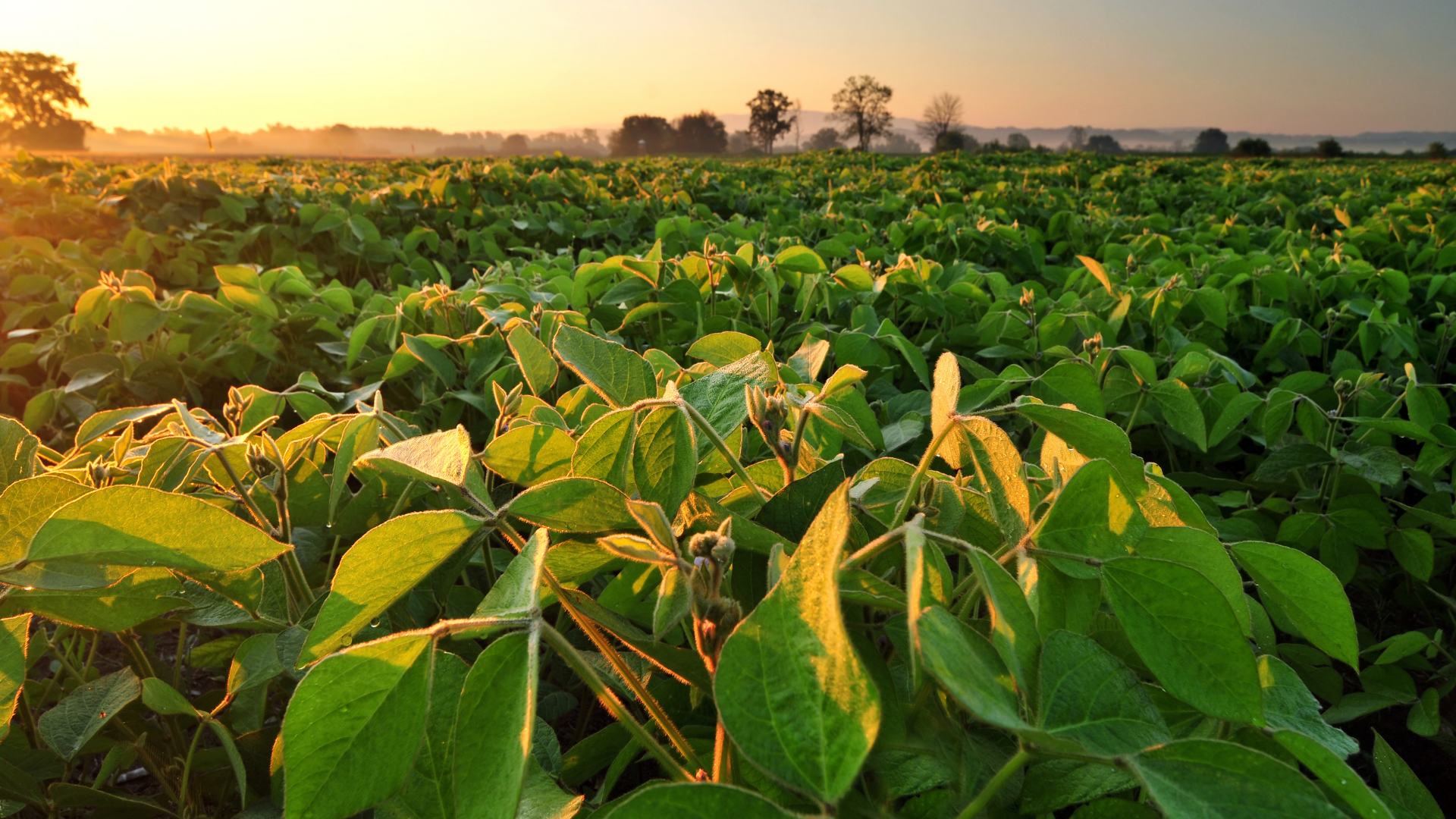
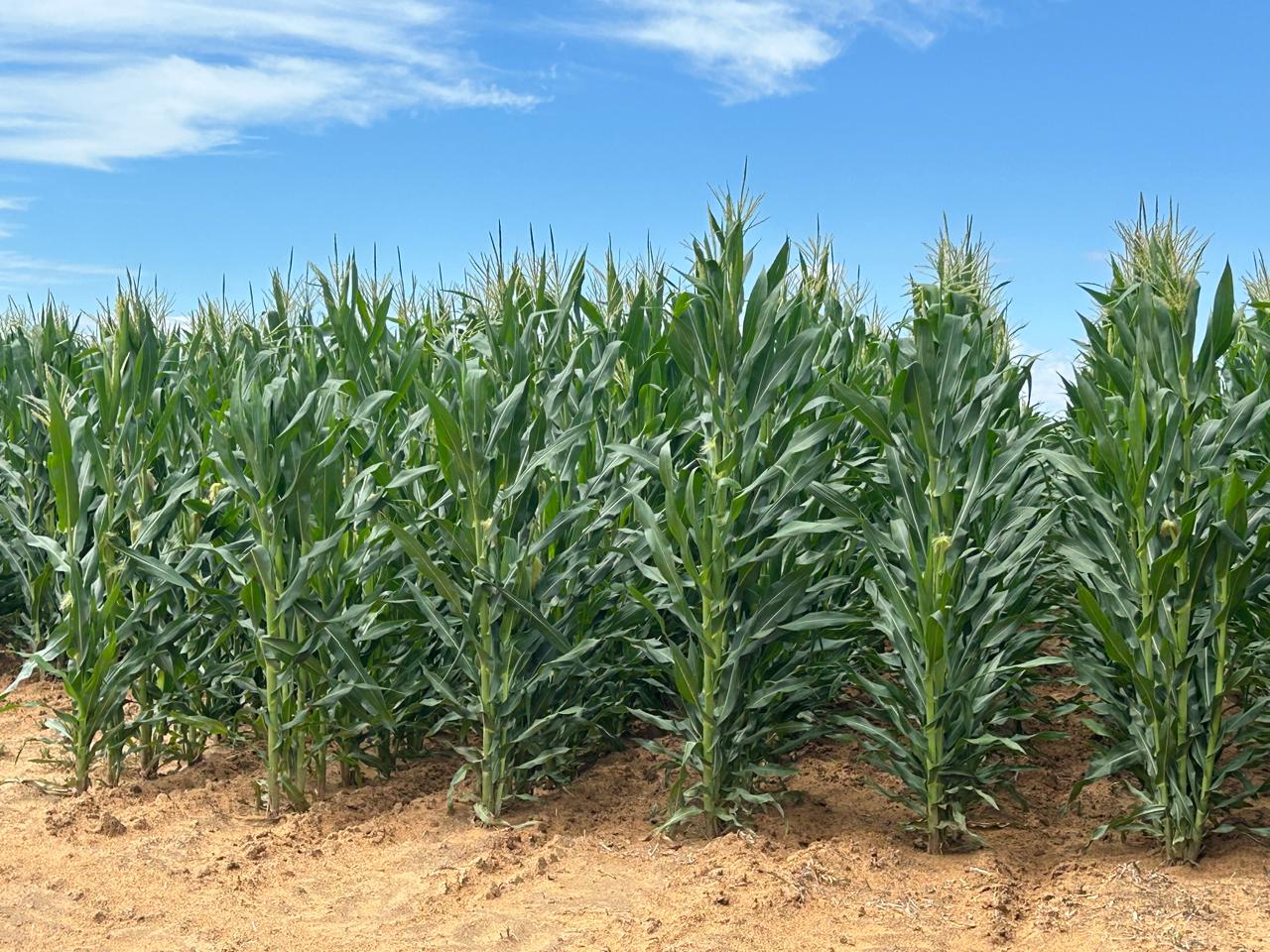
In the wide, fertile plains of the Free State, where golden maize waves in the summer wind and cattle quietly graze the veld, the age-old partnership between cropping and livestock takes on fresh significance. At Maritz Nel Family Trust, we believe the strength of our farm lies not only in the size of our fields or the number of our herds, but in how these enterprises work together—how maize, soya and cattle are integrated to build resilience, enhance soil health, diversify income, and deepen sustainability.
Why integrate crops and livestock?
Across Africa, integrated crop-livestock systems are recognised as a key pathway to sustainable intensification. Mixed systems produce roughly half the world’s cereals and around a third of its beef and milk, according to a major review. In South Africa, where agriculture faces the dual reality of variable climate and rising input costs, combining cropping and livestock offers strong advantages:
- Diversified income: While crop prices may fluctuate and weather risk looms, livestock can provide alternate cash flows and buffer against crop failure.
- Efficient resource use: Crop residues become forage; livestock manure becomes fertiliser; land and water are used more fully.
- **Improved soil health: ** Grazing after crop harvest helps incorporate organic matter, aerate soils, improve infiltration, and reduce compaction.
- Greater climate resilience: When one enterprise suffers (e.g., drought on crops), the other may compensate. Mixed systems are more stable over time.
This is not new theory for us at Maritz Nel. It’s simply how we farm—with purpose, adaptability and experience.
The Free State context: Opportunity + challenge
The Free State is one of South Africa’s agricultural powerhouses. The province accounts for about 34% of South Africa’s maize production and a significant share of soya. Equally, cattle farming remains important; for example, in 2023 the province supplied 22.9% of national cattle sales.
But the environment is demanding: summers are hot, rainfall is variable, soils may be prone to degradation without careful management. The clear skies, wide open spaces and long seasons make large-scale operations possible—but also expose farms to risk if the system is one-dimensional.
At Maritz Nel, we lean into this dual strength: our business includes both cropping (maize and soya) and livestock (cattle). We know that by integrating, we can build a stronger, more resilient operation.
How we make the integration work
Here’s how our integrated crop-livestock model takes shape on the farm.
1. Strategic crop rotation and residue utilisation
For our maize and soya operations, rotation is crucial. For example, research in the North-West Free State found that maize grown after soya had improved nutritional value compared to maize after maize. Soya has the advantage of fixing nitrogen and improving soil structure.
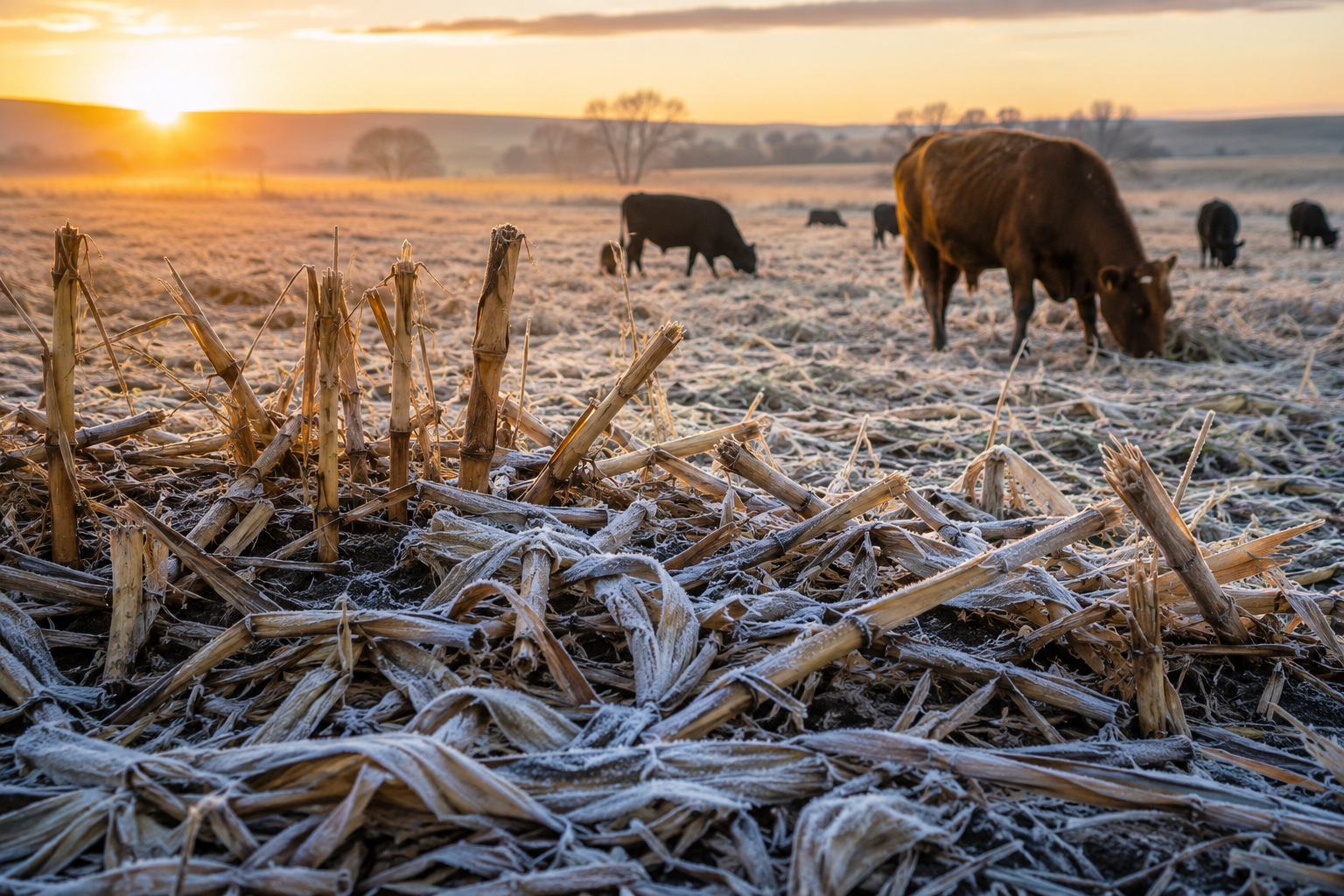
After harvest (for maize or soya), crop residues (stalks, leaves) are left or processed in such a way that they become fodder or grazing material for our cattle. As one study noted:
“The simplest way to integrate livestock and crops is to use crop residues as animal feed … In turn, the manure produced by the animals can be collected … and returned to the fields as organic fertiliser.”
In practical terms at Maritz Nel:
- We plan fields so that after harvesting, paddocks become available for grazing stock.
- Residues are grazed or processed rather than wasted.
- The manure is managed (composted or reintegrated) and applied to land to boost fertility, reducing synthetic fertiliser inputs.
2. Rotational grazing and rest periods
For our cattle enterprise, we use high-density, short-duration grazing with long recovery periods (sometimes known as mob grazing). We’ve found this not only improves pasture quality but also ties into the cropping side by ensuring paddocks can then rest and support the next crop cycle.
At our farm, we’ve seen tangible results: since starting our planned rotation approach, soil organic matter rose from about 1.7% to 2.9% in three years; earthworm counts tripled; our lands retain water better and show less runoff.
By coordinating cropping and grazing schedules, we ensure that:
- Crop paddocks are given adequate recovery time.
- Grazing does not interfere with crop establishment.
- Soil compaction is minimised, while manure is distributed evenly.
3. Soil health and fertility synergy
One of the greatest benefits of integrated systems is the nutrient cycling from livestock to crops, and vice versa. For example, legumes such as cowpeas in pasture or cover crops can fix significant nitrogen (about 120 kg/ha in some cases) which benefits subsequent cash crops.
In our operations:
- Cover crops or pasture crops are planted after harvest.
- When cattle graze these paddocks, their manure and trampling help break up residue, incorporate organic matter, and build soil life.
- This means less need for external fertiliser and fewer synthetic inputs.
The result is beneficial for crop yields, but also for the livestock side: healthier pastures, deeper soil, better water infiltration and better forage quality in dry times.
4. Diversification and risk management
In farming, you face weather, pests, market swings, and the unknown. Having both crops and livestock gives you two “legs” to stand on. For instance:
- If a late frost or drought reduces soya yields, the cattle enterprise may still generate income.
- If animal disease or price collapse happens, crop income may buffer the business.
- Because crop and livestock enterprises often peak at different times, cash flow can be smoothed.
This diversification builds long-term resilience—not just for the farm’s finances, but for the land and the business as a whole.
Real-world results from Maritz Nel
At Maritz Nel Family Trust we’ve seen measurable outcomes from our integrated approach:
- Soil organic matter increased from 1.7% to 2.9% in three years.
- Water retention improved, with less runoff and better performance in dry spells.
- Fertiliser bills have dropped, thanks in part to better nutrient cycling and improved soil biology.
- Our livestock maintain better condition and require less supplementary feed in winter because of improved pastures.
- Crop yields remain stable even in challenging seasons thanks to stronger soil health and better integration.
These outcomes validate the concept: mixed enterprise works.
Practical steps for other farmers to emulate
If you’re interested in adopting a mixed crop-livestock enterprise, here are practical steps we recommend (and follow) on our farm:
- Map your farm and resources
- Identify crop zones, pasture zones, rest areas, watering points.
- Understand soil types, drainage, paddock access.
- At Maritz Nel we allocate paddocks for specific roles: cash crop, grazing after harvest, rest/recovery.
- Design rotations and schedules
- Plan when a field is cropped, when it’s grazed, when it rests.
- Use mob or rotational grazing so cattle move frequently, giving land rest.
- Coordinate crop harvest with livestock movement: after harvest, move cattle in; before planting, ensure rest.
- Use crop residues effectively
- After harvest leave or process residues (stalks, leaves) for grazing or fodder.
- If residue is not grazed, ensure it’s incorporated or applied to soil to benefit following crop or pasture.
- Manage water and infrastructure
- Install watering points for cattle separate from crop irrigation to avoid contamination and compaction.
- Use fencing (movable or permanent) to control grazing areas. At Maritz Nel we use electric fencing for flexible paddock movement.
- Monitor soil health and fertility
- Regular soil tests (organic matter, nitrogen, pH, etc.).
- Track soil organic matter, earthworm counts, infiltration rates.
- Adjust fertiliser budgets—integrated systems often need less chemical input.
- Watch for pest and disease synergies
- Livestock grazing in crop stubble helps break pest and disease cycles.
- Cover crops and pastures can improve biodiversity and resilience.
- Plan for economics and cash flow
- Model your enterprises: cropping income, livestock income, costs of fencing, infrastructure, labour.
- Expect the integration to pay back over time—soil improvements may take years but the resilience gains compound.
Challenges and lessons we’ve learned
Integration isn’t without its hurdles. At Maritz Nel we’ve encountered a few, and we share them so others won’t have to reinvent the wheel:
- Infrastructure cost: Fencing, water points, paddock design require investment.
- Scheduling complexity: Ensuring crop and livestock operations align takes management.
- Stocking rate discipline: Over-grazing can damage rest paddocks and compromise crop land.
- Balancing cropping and grazing goals: Sometimes the best grazing conflict with the best crop start date—timing matters.
- Market synchronisation: Livestock markets may differ in timing and price from crop markets; planning is key.
The future: how we’re evolving
At Maritz Nel Family Trust we’re constantly refining our integration. Some of the next steps:
- More precise monitoring of soil carbon, moisture, and biology in grazed vs ungrazed paddocks.
- Use of cover crops specifically selected for dual purpose (soil improvement + forage for cattle).
- Applying data analytics (yield maps, pasture growth maps, grazing days) to optimise the sequence of cropping and grazing.
- Deepening our involvement in community and workforce education—since the people on the ground make the system work.
Conclusion
In an era of growing climate variability, rising costs and greater demand on sustainable practices, farms that rely on just one enterprise are more vulnerable. At Maritz Nel, we believe that integrating crops and livestock isn’t simply a nod to tradition—it’s a forward-looking strategy that builds resilience, promotes soil health, diversifies income, and strengthens our regional agriculture.
Whether you’re a commercial farmer, an emerging producer, or someone curious about integrated farming, the lesson is clear: by bringing together maize, soya and cattle—not separately but in harmony—you create a system that is greater than the sum of its parts. In the Free State, on ground we know, this makes all the difference.
If you’d like to know more about how we implement these strategies, or how they might apply to your farm, please get in touch with us at Maritz Nel Family Trust. We’re proud of our legacy—and even more excited about our future.